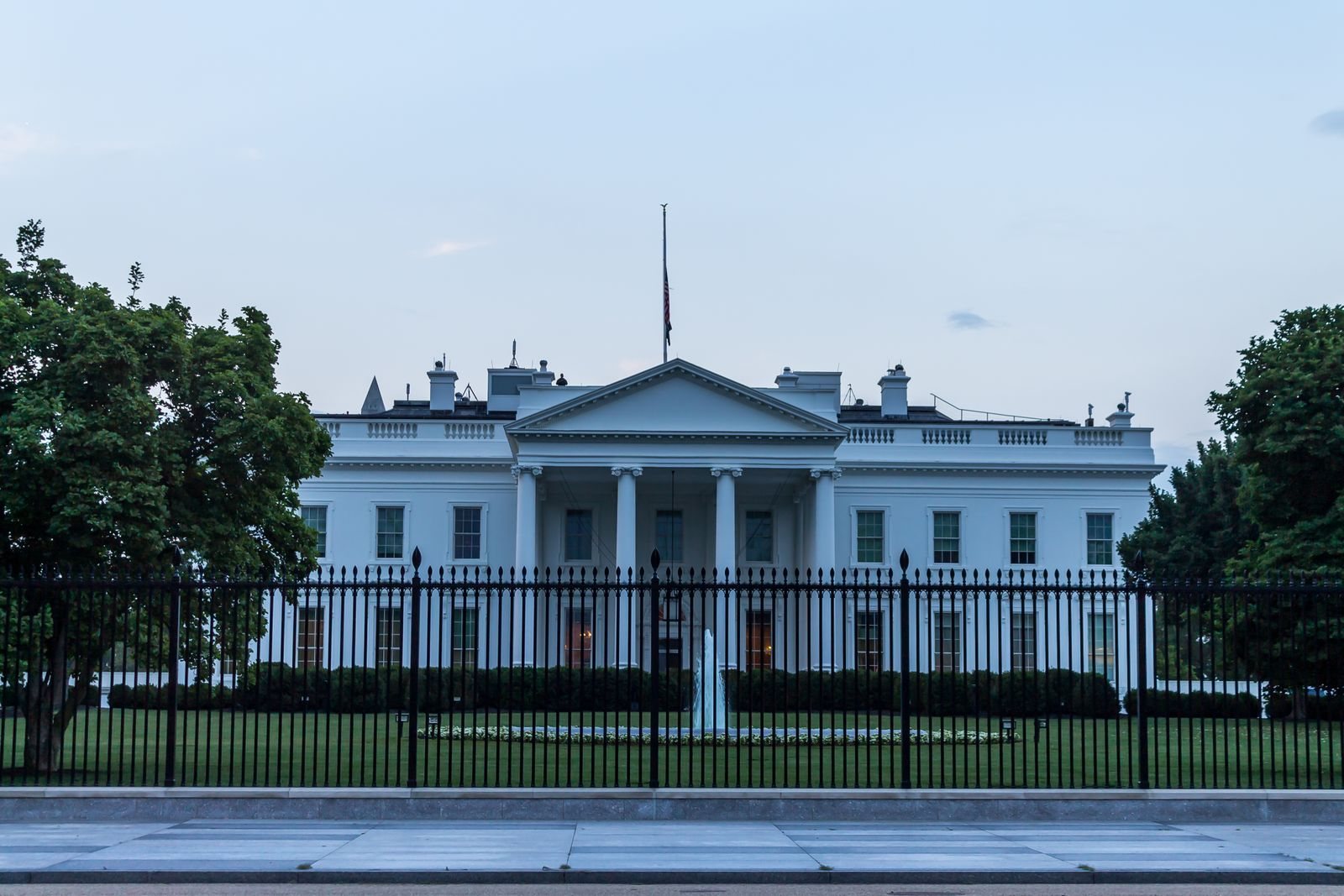
On 29 September 2026, US President Donald Trump signed Executive Order 14434, titled “Inaugurating the Era of Super Intelligence”, which requires federal departments and agencies to use “Super Intelligence” (SI) in place of “Artificial Intelligence” (AI) in official documents and communications. This is a change of terminology, not yet a change of law: the legal definition still borrows the existing statutory definition of AI word for word, existing contracts and regulations do not have to be amended, and private businesses are not required to follow suit. This article summarises the original text, explains what SI means, the official rationale, the reactions on both sides from politicians, lawyers and the tech industry, and then analyses the impact on vendors, international businesses and Vietnamese businesses. Every fact is sourced from primary documents or press reports, checked on 5 October 2026.
Quick summary
- The document: Executive Order 14434 “Inaugurating the Era of Super Intelligence”, signed 29 Sep 2026, published in the Federal Register on 2 Oct 2026, citation 91 FR 63129.
- SI = Super Intelligence. Federal executive agencies must use “Super Intelligence”/“SI” instead of “Artificial Intelligence”/“AI” in correspondence, public communications, websites, reports and non-statutory policy documents.
- The law has not changed: SI is currently defined exactly as AI is defined in 15 U.S.C. 9401(3); regulations, contracts and grants already issued do not have to be amended.
- Next step: within 60 days (by 28 Nov 2026, according to Freshfields), the Assistant to the President for Science and Technology must propose legislative language for a new federal definition of SI.
- Vietnam: no change. The Law on Artificial Intelligence No. 134/2025/QH15 (Luật Trí tuệ nhân tạo), in force since 1 Mar 2026, still uses the term “trí tuệ nhân tạo” (artificial intelligence).
- Executive Order 14434 signed on 29 Sep 2026; the Federal Register version 91 FR 63129 published on 2 Oct 2026.
- Deadline to propose a new statutory definition of SI: 60 days from the signing date (Section 3(b) of the order).
- A Quinnipiac poll released on the day of signing: 25% of respondents approve of Mr Trump’s handling of AI, 58% disapprove (survey 24–27 Sep, margin of error 3.8 percentage points).
- A day later, the Governor of California signed Executive Order N-10-26 requiring state agencies to keep calling it “Artificial Intelligence” and “AI”.
What happened: the order, the signing date and where it was published
On 29 September 2026, the White House published Executive Order 14434, titled “Inaugurating the Era of Super Intelligence”, signed by President Donald Trump. The full text is posted in the Presidential Actions section of whitehouse.gov, together with a fact sheet released the same day. Three days later, the order was officially published in the Federal Register, Vol. 91, No. 190, on 2 October 2026, pages 63129–63130 — the PDF can be downloaded from govinfo.gov.
The core content sits in Section 1. The order states that it is the policy of the Administration that, “to the maximum extent permitted by law”, the executive branch shall use the terms “Super Intelligence” and “SI” in place of “Artificial Intelligence” and “AI”, and “will not acknowledge” the usage of the old terms in any applicable setting. Section 2 turns that policy into concrete tasks for departments and agencies. Section 3 deals with the definition. Section 4 contains the general provisions typical of US executive orders.
The order does not set a separate effective date. The White House fact sheet describes the signing as replacing the terminology “in the executive branch”, and law firms such as Freshfields advise clients to prepare for federal agency solicitations, forms and correspondence to shift to the SI term going forward. Publication costs are borne by the Office of Science and Technology Policy (OSTP), under Section 4(d).
The order came on the same day as another event at the White House. According to CNBC, Mr Trump hosted a lunch with the heads of several major AI companies, after which these leaders signed a two-page document called the “White House Accord on Super Intelligence”. CNBC lists the signatories as Sundar Pichai (Google), Elon Musk, Dario Amodei (Anthropic), Mark Zuckerberg (Meta), Greg Brockman (OpenAI) and Jensen Huang (Nvidia). The two documents should be kept apart: the executive order is a legal instrument binding federal agencies, while the accord is a voluntary commitment. CNBC notes that the accord makes no declaration about a name change; the words “Super Intelligence” appear only in its title.
| Item | Details |
|---|---|
| Title | Executive Order 14434 — Inaugurating the Era of Super Intelligence |
| Signed by · date | President Donald J. Trump · 29 Sep 2026 |
| Official publication | Federal Register Vol. 91, No. 190, 2 Oct 2026, pp. 63129–63130 (document no. 2026-20321) |
| Who it applies to | Departments and agencies of the federal executive branch (Section 2(a)) |
| Documents that must change | Official correspondence, public communications, websites, reports, policy documents and other non-statutory documents |
| No mandatory amendment | Previously issued regulations, Presidential actions, contracts, grants and historical documents (Section 2(b)) |
| Definition of SI | Exactly the definition of “artificial intelligence” in 15 U.S.C. 9401(3) (Section 3(a)) |
| Next action | Within 60 days, the Assistant to the President for Science and Technology (APST) proposes legislative language for a new federal definition of SI (Section 3(b)) |
| Right to sue | The order creates no right or benefit enforceable at law (Section 4(c)) |
What does SI stand for, and is it “superintelligence” in the scientific sense?
SI stands for Super Intelligence, but in this order it does not yet carry the meaning of “superintelligence” as researchers understand it. Section 3(a) provides that, except where otherwise provided by law, “Super Intelligence” and “SI” mean the technologies and systems encompassed by the term “artificial intelligence” as defined in section 9401(3) of title 15, United States Code. In other words, the legal scope of SI today is exactly the scope of AI yesterday.
The borrowed definition reads as follows: artificial intelligence is a machine-based system that can, for a given set of human-defined objectives, make predictions, recommendations or decisions influencing real or virtual environments — the full text is available at 15 U.S.C. § 9401 on Cornell LII. This definition is broad: it covers credit-scoring models and product recommendation systems, not just large language models. The law firm HWG highlights the consequence: the order “does not limit SI to systems that exceed human intelligence”.
This creates a linguistic mismatch. In the industry, “superintelligence” — usually written as one word — already has a specific meaning. The San Francisco Standard quotes David Krueger, an AI professor and founder of the nonprofit Evitable: “Superintelligence is already a word, and it means something different than AI; specifically, AI that is vastly superhuman and so very difficult, if not impossible, to control.” In the same article, the paper notes that Meta has used the term since June 2025, when it named its team “Meta Superintelligence Labs”. So the same phrase is used by the order to mean all of today’s AI, and by researchers to mean a hypothetical future level of capability.
For Vietnamese readers, translation also needs care. Rendering “Super Intelligence” as “siêu trí tuệ” (superintelligence) is literally correct, but placed in a contract or report without explanation, it can easily mislead readers into thinking the US has just recognised a new generation of technology. In this article, Namtech keeps the word “SI” when referring to the US government’s term and uses “AI” or “artificial intelligence” when referring to the technology in general.
| Term | Who uses it | Scope | Legal status in the US |
|---|---|---|---|
| Artificial Intelligence (AI) | Federal law, state law, the tech industry, internationally | Machine-based systems that make predictions, recommendations or decisions for human-defined objectives | Statutory definition in 15 U.S.C. 9401(3), still intact |
| Super Intelligence (SI) | The US federal executive branch from 29 Sep 2026 | Currently exactly the same scope as AI above (Section 3(a) of the order) | Administrative term; a new statutory definition is awaiting a proposal within 60 days |
| Superintelligence (one word) | Researchers, some labs | Hypothetical AI far surpassing humans in most domains | No statutory definition |
Why rename: the official rationale and the political context
The official rationale is that the Administration believes the word “artificial” no longer accurately reflects the technology’s capabilities. Section 1 of the order states that the technologies pioneered by American innovators “far exceed what was envisioned” when the term “Artificial Intelligence” first came into use, and that the capabilities of today’s frontier systems “do much more than imitate or automate discrete aspects of human intelligence”. From this, the text concludes that “Super Intelligence” more appropriately captures “the promise, potential, and rapidly advancing capabilities” of these technologies.
The White House fact sheet adds two arguments. First, the US is “the birthplace” of the AI field and has led for over 70 years, so the federal government needs a name that fully reflects the technology’s promise. Second, using the new name will ensure departments and agencies “remain focused on expanding the capabilities and applications” of the technology. The fact sheet also lists related policies such as the Genesis Mission (more than $5 billion) and the July 2025 AI Action Plan with more than 90 federal actions — notably, the fact sheet itself already refers back to those earlier policies using the SI term.
The political context is where the press has focused its analysis. CNBC describes it as a “forced rebrand” for an industry Mr Trump strongly supports, at a time when Americans are increasingly worried about AI, and notes that the rename comes weeks before the midterm elections. According to CNBC, a Quinnipiac University poll released on the afternoon of 29 September found that just 25% of respondents approve of the President’s handling of AI, versus 58% who disapprove. CNBC also reports that the week before, Mr Trump asked his social media followers whether they preferred “SUPER INTELLIGENCE” or “SUPERIOR INTELLIGENCE”.
According to Fox Business, Mr Trump had called for replacing the term “artificial intelligence” with SI in an earlier speech at the United Nations General Assembly, and quotes him: “whoever wins SI, whoever wins superintelligence, wins”. The San Francisco Standard quotes Mr Trump explaining that he uses the word “super” because the other word is “a fake word”. Side by side, the official rationale emphasises technological capability, while the press emphasises the political message; the two readings are not mutually exclusive.

Scope: who must use SI, and who does not
Only departments and agencies of the US federal executive branch must use SI; Congress, the courts, state governments, private businesses and other countries are not bound. Section 2(a) limits the obligation to “official correspondence, public communications, websites, reports, policy documents, and other non-statutory documents within the executive branch”. The phrase “to the maximum extent permitted by law”, repeated in both Section 1 and Section 2, indicates that where a statute uses the words “artificial intelligence”, agencies must still follow the statute.
Section 2(b) is the most important provision for businesses: the order does not require the alteration of previously issued regulations, Presidential actions, contracts, grants or historical documents. IAPP — the professional association for privacy and AI governance — summarises that the immediate change is linguistic, “not a wholesale rewrite of U.S. laws governing AI”. HWG puts it more bluntly: the order does not require private organisations to adopt the new terminology or change their products, contracts or compliance programmes.
Implementation has already begun at some agencies. When Namtech checked on 5 October 2026, the address cisa.gov/ai of the Cybersecurity and Infrastructure Security Agency (CISA) redirected to a “Super Intelligence” page, whose opening line says the Department of Homeland Security plays a critical role in ensuring SI security. The guidance on agentic AI that CISA co-authored with the Australian cyber security agency is now titled “Careful Adoption of Agentic SI Services”, and the old URL containing “agentic-ai” also redirects to a new URL containing “agentic-si”.
Even so, the transition is not yet consistent. On CISA’s own “Super Intelligence” page, some document titles and organisation names still keep the word AI, for example a title containing the phrase “Securing Data Used to Train & Operate AI Systems” and the name of the NSA’s Artificial Intelligence Security Center. The NIST AI Risk Management Framework page still uses the name “Artificial Intelligence Risk Management Framework”. This is consistent with Section 2(b): titles of documents already issued do not have to be changed.
| Item | Switched to SI? | Basis |
|---|---|---|
| New federal agency press releases, correspondence, websites, reports | Yes, to the extent permitted by law | Section 2(a) |
| Regulations, contracts, grants already issued | Not required | Section 2(b) |
| Statutory definition of AI (15 U.S.C. 9401(3)) | No, until a new law or action | Section 3(a) |
| California state law, California state agencies | No — the state ordered the word AI to be kept | Executive Order N-10-26 of 30 Sep 2026 |
| Private businesses, vendors | Not required | Analysis by HWG, IAPP |
| CISA’s AI topic page | Already renamed “Super Intelligence” | cisa.gov, checked 5 Oct 2026 |
| Name of NIST’s AI RMF | Not yet changed | nist.gov, checked 5 Oct 2026 |
Reactions: support, opposition and the tech industry’s stance
Reactions are clearly split: supporters see it as a signal that the US is determined to win the technology race, while opponents argue that renaming does not address risk and adds terminological confusion. This article presents both sides as found in the sources read, without making political judgements about who is right.
Supporters and allies. The San Francisco Standard reports that David Sacks, Mr Trump’s former AI and crypto czar, celebrated the White House accord, and that physicist Guillaume Verdon, a prominent figure in the accelerationist movement, supported the change of terminology. According to Fox Business, Mark Zuckerberg wrote on X that the summit was “a significant positive step” because the leaders of the major labs committed to robust internal controls and multiple layers of audits — though note that he was speaking about the safety accord, not the name. On concrete action, Business Standard reports that Elon Musk confirmed on X that SpaceX’s AI arm, SpaceXAI, will be renamed SpaceXSI.
Opponents. Senator Mark Warner, Vice Chairman of the Senate Intelligence Committee, told CNBC that changing what we call artificial intelligence “does nothing to address the very real risks that come with increasingly powerful AI systems”. On 30 September 2026, California Governor Gavin Newsom signed Executive Order N-10-26 requiring all agencies subject to his authority to keep referring to “Artificial Intelligence” and “AI”, “notwithstanding any rebranded or different terminology used by the federal government”, unless inconsistent with the law. The preamble of the state order says that “purporting to change something’s name” cannot distract a person of normal intelligence from recognising the failure to act on well-documented security and safety risks.
Academics and experts. Besides David Krueger’s view cited above, The Week compiles the view of Simon Coghlan, a digital ethics lecturer at the University of Melbourne, that it is doubtful the new term “will stick” with the public because it “exaggerates the current capacities of AI” (quoted second-hand — The Week cites the BBC), and of Pedro Domingos, a computer science professor at the University of Washington, that calling it “super” is ultimately “just marketing” (quoted second-hand via The Week). The National cites Neil Chilson, former chief technologist of the Federal Trade Commission (FTC) during the first Trump administration, recalling that John McCarthy himself — who coined the term “artificial intelligence” in 1956 — also came to regret the name.
The tech industry: cautious. According to The San Francisco Standard, reactions in Silicon Valley have been “mixed”, and the leading labs have not relabelled their models as SI. The heads of Google, OpenAI and Anthropic did not use the term “SI” during the press conference; Dario Amodei and Greg Brockman both said “AI”, and Amodei was the only one who insisted that “the technology has real risks”. By contrast, The National recounts Jensen Huang correcting himself after slipping into “AI” during a speech in Washington, while The San Francisco Standard records Elon Musk catching himself mid-remarks: “SI, pardon me”. Freshfields notes that the safety accord signed the same day “does not expressly require” signatories to adopt the new terminology and does not create enforceable obligations.
There are also side details verified by the press. Snopes confirmed that the two-page accord posted by the White House contains the misspelling “Unites States” under the President’s signature — the error is in the accord, not in the executive order published in the Federal Register. The National cites Cloudflare Radar as saying that certificates logged for .si domains — Slovenia’s country-code domain — increased after the rename announcement.
| Party | Position | Source |
|---|---|---|
| The White House | SI accurately reflects the technology’s capabilities; federal agencies must use it | Executive Order 14434, fact sheet |
| Elon Musk | Renaming SpaceXAI to SpaceXSI | Business Standard |
| David Sacks, Guillaume Verdon | Support the accord/new terminology | The San Francisco Standard |
| Sen. Mark Warner | Renaming does not address risk | CNBC |
| Governor Gavin Newsom | California state agencies keep the word “AI” | Executive Order N-10-26 |
| David Krueger | Superintelligence already means something else; adds confusion | The San Francisco Standard |
| Simon Coghlan, Pedro Domingos | Exaggerates capabilities; “just marketing” | The Week (second-hand) |
| Google, OpenAI, Anthropic | Have not renamed their models; leaders still said “AI” at the press conference | The San Francisco Standard |
Impact on US agencies, vendors and international businesses
The immediate impact is mainly administrative and communicational: US agencies change the wording on new documents, vendors to the US government will see the word SI in solicitations, and businesses outside the US have almost nothing to do right away. Real legal impact will only come once a new statutory definition is proposed and adopted.
For federal agencies, the task is to review websites, document templates, press releases and new reports to replace the terminology, while keeping the words “artificial intelligence” wherever a statute requires them. The CISA case shows that this process can involve changing website URLs; organisations that cite federal documents in their own files should recheck those links.
For contractors and vendors to the US government, Freshfields advises entities interacting with executive agencies — federal contractors, grant applicants, companies filing comments on proposed regulations — to prepare for solicitations, forms and official correspondence to adopt the term “Super Intelligence”. The firm also warns that a statutory definition of SI, if adopted, could shape the scope of federal incentives, export controls, oversight, compliance obligations, government-contract requirements, and even the interpretation of existing AI-related statutory and contractual provisions. This is why the 60-day milestone is more worth watching than the name itself.
For international businesses, IAPP points to the most practical problem: organisations will have to manage “two vocabularies” at the same time. US federal agency materials use SI, while federal statutes, state laws, contracts, internal policies, vendor questionnaires and governance frameworks still use AI. The two terms may refer to the same systems in this context but not necessarily in every legal or operational context. On top of that, California — home to many major AI companies — has officially chosen to keep the word AI, so a business dealing with both federal agencies and California state agencies will encounter two names for the same technology.
For most Vietnamese businesses that do not sell to the US government, the direct impact is close to zero. Indirect impact may arise when US partners update their documents, when US technical standards or cyber security guidance — such as the documents CISA co-authors with international partners — are renamed, or when technology vendors rename products, as in the SpaceXSI case.
Terminology in contracts and internal policies: what to do
The safest approach is not to mass-edit documents in use, but to add a definitions clause treating AI and SI as the same group of technologies in new contracts and policies. The order does not require businesses to change the wording, and the order itself has not yet changed the statutory definition, so hasty edits may add confusion rather than reduce risk.
The general principle is that a good contract defines its subject by substance, not by label. If your contract already defines an “AI system” by functional description — a machine-based system that makes predictions or recommendations — then the US relabelling does not change its scope. Risk only arises when a contract defines the term by reference to an external text that may change, for example “AI as defined under current US federal law”: if a new SI definition is adopted and broadens or narrows the scope, the interpretation of that clause may change accordingly.
The table below is Namtech’s suggested checklist for businesses dealing with US partners. These are operational suggestions based on the content of the order and the legal analyses cited, not legal advice; for specific contracts, businesses should consult a lawyer.
| Group | Recommended actions | Priority |
|---|---|---|
| Selling goods/services to US federal agencies | Be ready to read solicitations using the word SI; add a sentence defining AI = SI in bids; track the proposed new statutory definition | High |
| Partners or customers in the US | Review clauses that refer to “the definition of AI under US law”; add functional definitions in new contracts | Medium |
| Applying US cyber security guidance (CISA, NIST) | Update links to reference documents; note old/new names in your records | Low |
| Operating only in Vietnam | Keep the term “trí tuệ nhân tạo” (artificial intelligence) as used in Law 134/2025/QH15 | No change needed |
Vietnam still says “trí tuệ nhân tạo” (artificial intelligence)
Vietnam has no document renaming this technology; the current legal framework consistently uses the term “trí tuệ nhân tạo” (artificial intelligence). The highest-level instrument is the Law on Artificial Intelligence No. 134/2025/QH15 (Luật Trí tuệ nhân tạo), passed by the National Assembly on 10 December 2025, signed by National Assembly Chairman Trần Thanh Mẫn, and in force from 1 March 2026 — this information comes from the Government’s legal documents portal. The implementing instrument is Decree 142/2026/NĐ-CP, which Namtech analysed in Decree 142/2026: detailed rules under Vietnam’s AI Law — what businesses need to know.
This has practical significance for Vietnamese businesses. Obligations on risk classification, transparency or impact assessment under Vietnamese law are determined by the definitions in Vietnamese law, regardless of what the US government calls the technology. Contracts, internal regulations and compliance files in Vietnam should keep using “trí tuệ nhân tạo” (artificial intelligence) to match the law; where there are US partners, a sentence can be added explaining that “Super Intelligence (SI)” in US federal agency documents is understood as the same group of technologies.
Globally, the US is currently an outlier. Europe still uses the AI concept in the AI Act and its recent amendments — see Namtech’s article EU delays high-risk AI rules to Dec 2027. Even within the US, as noted, California has officially chosen to keep the word AI. So for multinational businesses, “AI” remains the common term, while “SI” is the administrative term of one specific branch of government.
Namtech’s view: the name changes, data principles do not
Whether it is called AI or SI, the questions businesses need to answer remain the same: where does our data go, who can see it, and whose infrastructure does the model run on. Executive Order 14434 changes a label in US administrative documents, but it does not change how a language model processes documents, nor the data protection obligations of Vietnamese businesses.
This very story shows a rarely mentioned risk: when a business depends entirely on AI services hosted abroad, policy changes in that country — whether just terminology, or deeper changes to statutory definitions and export controls as Freshfields warns — can all affect the terms of service it relies on. Conversely, with models running on machines in the office and data that never leaves the organisation, the business controls most of those variables itself. Namtech has analysed this trend in Sovereign LLM on-premise and “The year of AI sovereignty”.
If your business is considering internal AI, see the open AI models Namtech installs in its packages — all licensed for commercial use and running entirely on the business’s own machines — and the internal AI service packages to choose a configuration for your team size.
Executive Order 14434 of 29 September 2026 requires US federal executive agencies to call AI “Super Intelligence” (SI), but it does not yet change the statutory definition, does not require old contracts to be amended and does not bind private businesses — for Vietnamese businesses, the legal term remains “trí tuệ nhân tạo” (artificial intelligence) under Law 134/2025/QH15, and the thing to watch is the SI definition the White House will propose within 60 days.
Frequently asked questions
What does SI stand for in the US executive order?
SI stands for Super Intelligence. Executive Order 14434, signed on 29 September 2026, requires departments and agencies of the US executive branch to use “Super Intelligence” and “SI” in place of “Artificial Intelligence” and “AI” in documents, press releases, websites and non-statutory policy documents.
Does the rename change the legal definition of AI in the US?
Not yet. Section 3 of the order defines SI as the technologies and systems encompassed by the definition of “artificial intelligence” in 15 U.S.C. 9401(3). The Assistant to the President for Science and Technology has 60 days to propose legislative language for a new federal definition; that definition only takes effect through subsequent Presidential action consistent with law or an Act of Congress.
Do private businesses, including Vietnamese businesses, have to switch from AI to SI?
No. The order applies only to departments and agencies of the US federal executive branch. The law firm HWG notes that the order does not require private organisations to adopt the new terminology or change their products, contracts or compliance programmes. Businesses dealing with US federal agencies should be prepared to see the word SI in solicitations, forms and correspondence.
Do signed contracts that use the word AI have to be amended?
Not under the order. Section 2(b) makes clear that the order does not require the alteration of previously issued regulations, Presidential actions, contracts, grants or historical documents. For new contracts, it is advisable to add a definitions clause treating AI and SI as the same group of technologies to avoid interpretation disputes.
Will Vietnam rename artificial intelligence to follow the US?
There is no such document. Vietnam’s main legal instrument is the Law on Artificial Intelligence No. 134/2025/QH15 (Luật Trí tuệ nhân tạo), passed on 10 December 2025 and in force from 1 March 2026, together with Decree 142/2026/NĐ-CP implementing the law. Contracts and compliance files in Vietnam still use the term “trí tuệ nhân tạo” (artificial intelligence).
Is the Super Intelligence in the order the same as the superintelligence researchers talk about?
No. Among researchers, superintelligence usually means AI that vastly surpasses humans and is very difficult to control. Under the order, SI is currently just a new name for exactly the scope of AI under current US law; the law firm HWG notes that the order does not limit SI to systems that exceed human intelligence.
Note: this article summarises documents and news for reference and is not legal advice. The Federal Register website (federalregister.gov) blocks automated access, so Namtech cites the Federal Register PDF on govinfo.gov. Articles from Bloomberg, AP and Forbes returned 403 errors when checked and were therefore not used as sources.
- The White House — Executive Order 14434: Inaugurating the Era of Super Intelligence — 29 Sep 2026
- The White House — Fact Sheet: President Donald J. Trump Inaugurates The Era of Super Intelligence — 29 Sep 2026
- Federal Register Vol. 91, No. 190, p. 63129 — PDF on govinfo.gov — 2 Oct 2026
- 15 U.S.C. § 9401 — Definitions (Cornell LII) — checked 5 Oct 2026
- CISA — Super Intelligence and CISA — Careful Adoption of Agentic SI Services — checked 5 Oct 2026
- NIST — AI Risk Management Framework — checked 5 Oct 2026
- State of California — Executive Order N-10-26 (PDF) — 30 Sep 2026
- CNBC — Trump tries to rename AI 'super intelligence' as polls show him sinking on key issue — 29 Sep 2026
- IAPP — AI by any other name? White House directs federal agencies to enter the era of 'super intelligence' — checked 5 Oct 2026
- Freshfields — Trump Executive Order Mandates Shift to “Super Intelligence” — checked 5 Oct 2026
- HWG LLP — Trump Replaces AI with Super Intelligence in the Executive Branch — 1 Oct 2026
- The San Francisco Standard — Trump wants to rebrand AI “Super intelligence.” Will Silicon Valley play along? — 1 Oct 2026
- The National — Typos and tempers: Why Trump's attempted rebrand of AI to super-intelligence faces opposition — 1 Oct 2026
- The Week — ‘Artificial’ or ‘super’? Trump institutes an AI rebrand — checked 5 Oct 2026
- Fox Business — Trump signs executive order rebranding AI as 'Super Intelligence' — checked 5 Oct 2026
- Business Standard — Elon Musk to rename SpaceX AI arm SpaceXSI after Trump's directive — checked 5 Oct 2026
- Snopes — White House misspelled United States in 'super intelligence' accord — checked 5 Oct 2026
- Government legal documents portal (Cổng văn bản Chính phủ) — Law No. 134/2025/QH15: Law on Artificial Intelligence (Luật Trí tuệ nhân tạo) — checked 5 Oct 2026